

Five Minutes in a Doorway
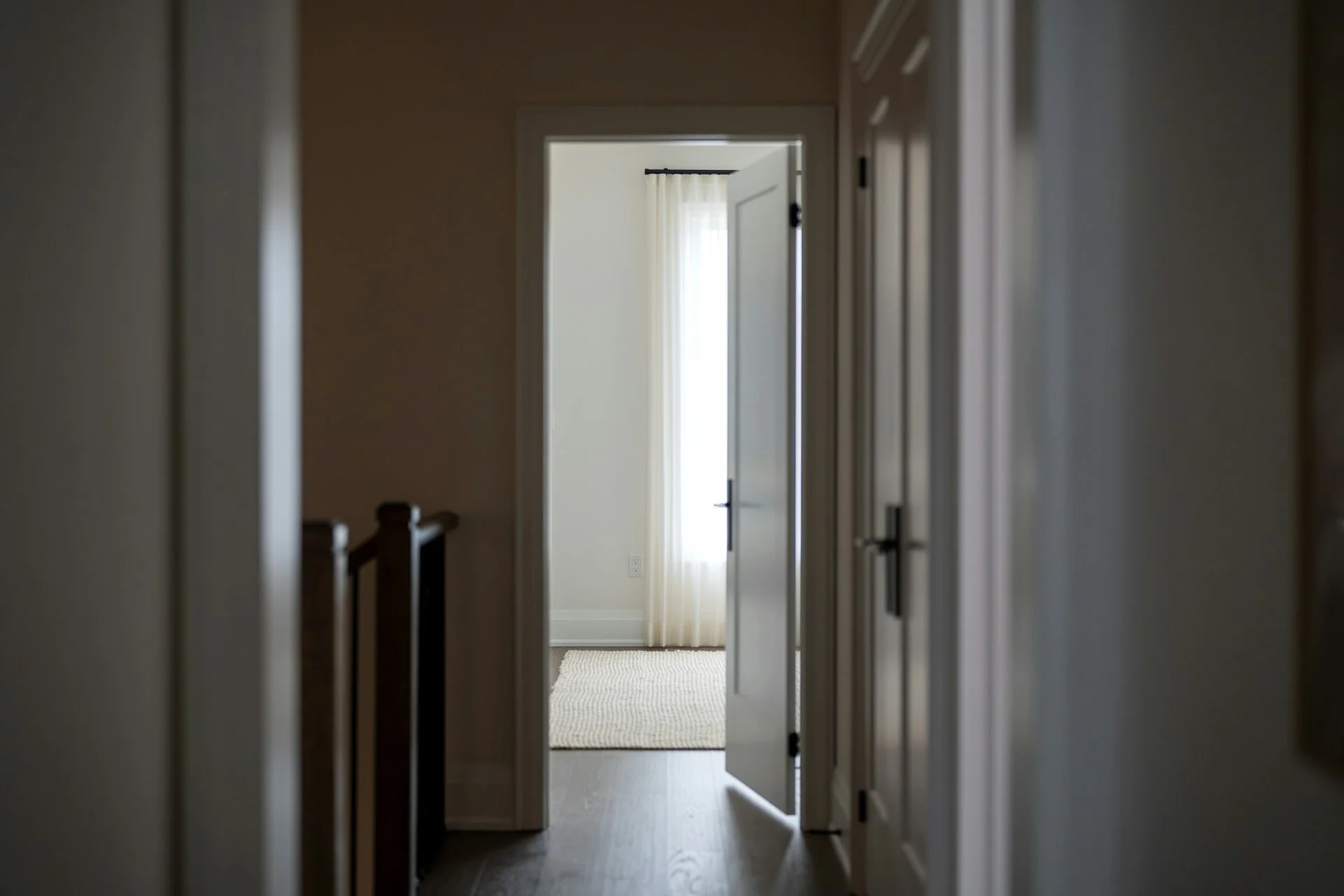
The only piece of mobility equipment you need is already in your house. You walk past it forty times a day.
At 2:47pm on a Thursday, the body stages a small, quiet revolt.
The hips, which have been folded into office-chair geometry for five hours, register a formal complaint. The shoulders, now residing somewhere in the vicinity of the ears, ask when they can come down. The lower back, which has been holding the whole operation together, begins to whisper about its grievances, and by Friday afternoon those whispers will be a fully formed speech.
This happens to everyone who sits for a living. It is not a failure of your body and it is not a failure of your posture. It is the entirely predictable result of asking a creature evolved to walk twelve kilometres a day to instead sit in a shape it doesn't understand, for nine hours, five days a week, for decades.
The fitness industry's answer to this problem is to sell you a solution, a class, or membership. An app with a perky Australian woman shouting encouragement at you through your phone. A six-week protocol involving something called a "lacrosse ball," which I refuse to believe is a standard household item. These things may work for some people. They have never, over the years, worked for me.
What has worked, reliably, is a doorway.
The Doorway Principle
Here is the entire thing: you already have the only piece of mobility equipment you need. It is the doorway between your kitchen and your hallway, or your bedroom and your bathroom, or your office and the rest of your house. It is structural, it is free, and you walk through it approximately forty times a day without ever using it for anything other than transit.
A doorway can do four things a yoga mat cannot. It can hold your hands above your head while your body hangs and decompresses. It can open your chest in a way that eight hours of hunching had convinced you was no longer possible. It can let you put one foot up and stretch a hip flexor that has been quietly shortening since 2019. And, this is the one that changes things, it is already in your path. You do not have to go to it, you just have to stop, briefly, as you walk through it.
This matters more than it sounds. Most stretching doesn't happen because most stretching requires going somewhere, a gym, a mat, a corner of the living room set up for it. The doorway removes the going, you're already there. You were just going to walk through it anyway and now, you might as well stand in it for a minute.
What I Actually Do
Here is the honest version of my routine. It is five minutes long, because I have tried longer routines and I do not do them. I do this one, most days, because it is short enough that refusing would require actual effort.
One minute overhead. Hands on the top of the doorframe, or, if you're taller than a standard doorway, on the top of the frame from the side. Let your weight hang slightly. Feel the shoulders remember they can move. This is the one that makes you involuntarily exhale the first time you do it.
One minute chest opener. Forearms on either side of the doorframe at shoulder height, step one foot forward, lean gently through. Your chest will open in a way that announces, with some urgency, that it has been waiting for this for weeks.
One minute per side, hip flexor. One foot up on a chair or low stool just past the doorway. Square your hips. Lean your weight slightly forward into the front leg. Do one side, then the other. The office chair has done the damage; this is the undoing.
One minute of whatever your body is asking for. The spinal rotation you've been avoiding. The neck roll that always helps, and a brief hamstring stretch with your hands on the doorframe for support. You will know what this minute is the moment you're in it.
Five minutes, fully clothed, without any equipment or app. You can do it at 2:47pm on a Thursday, between meetings, in your socks.
Why This Is Also Not Really About Stretching
The thing I've come to understand about movement for desk workers is that the problem is almost never the exercise itself. It's the logistics around it, the getting ready, the changing, the going somewhere, the committing to a time slot that is structurally hostile to a working life. By the time you've solved all of that, you are too tired to do the thing you were going to do.
The doorway collapses the logistics to zero. You are in your house and walk through a door. You stop; that's the whole infrastructure. And in my experience, that's where sustainable practices actually live, in the spaces where the doing costs almost nothing, so the doing actually happens.
Most anchors are like this, in the end. Not heroic, just small and positioned well enough that you don't have to fight yourself to reach them.
📝 A Small Anchor to Try This Week
Pick your doorway. The one you walk through most. Between now and next Sunday, stop in it once a day and do sixty seconds of something, arms overhead, chest opener, whatever your body requests. Sixty seconds, not five minutes. If that goes well for a week, add another sixty the following week. The goal is to build a practice so small it cannot fail. Report back on which doorway you picked. I have opinions.
This was the fourth entry in The Journal. New ones arrive every other Saturday, alongside the weekly Sunday Reset newsletter, one honest letter with one small anchor to try that week.
Now: what does your body want at 2:47pm on a Thursday? Tell me in the comments, and I'll publish the best ones, including the ones that involve snacks!
Everyday Anchors is a personal publication, not a clinic. I'm a certified coach with a long food-industry background — not your doctor, therapist, or physical therapist. Everything here is for inspiration and good conversation. If something you're dealing with is serious, please talk to someone qualified to actually see you.